
June 19, 2026
Dubai Harbour Access Bridge Nears Completion: How Better Connectivity and New Roads Influence Driving Safety and Motor Insurance in the UAE
 Motor Insurance
At 6:00 PM, and you’re driving toward Dubai Harbour after a long day. You planned to reach Dubai Harbour but are stuck in traffic near the waterfront communities during peak hours. As time passes by, you realise that congestion isn’t just an annoying waste of time; it’s rather a major catalyst for bumper-to-bumper accidents, frayed tempers, and rising insurance premiums.
However, the major relief on the horizon is that the highly anticipated Dubai Harbour Access Bridge project is rapidly nearing completion. Driven by Dubai’s Roads and Transport Authority (RTA), this massive infrastructure update promises to reshape how thousands of motorists access the bustling waterfront destination. In addition to cutting down travel times, this bridge is also set to trigger a ripple effect across urban driving safety and the landscape of motor insurance in the UAE. So, without further ado, let’s take a deep dive into how this massive engineering feat will affect your daily commute, your safety with the best car insurance in Dubai, and your wallet.
Unbottlenecking the Waterfront: The Bridge at a Glance
The Dubai Harbor Access Bridge project is an ambitious solution to a geographic bottleneck. For years, accessing Dubai Harbour meant moving through congested intersections that blended local residential traffic with tourist commuters. However, the new project introduces a direct bridge stretching 1,500 meters while featuring two lanes in each direction.
It links the intersection of Sheikh Zayed Road and Al Falak Street directly to Dubai Harbour. According to official announcements by the Dubai Roads and Transport Authority (RTA), this engineering update will drastically increase the road capacity up to 6,000 vehicles per hour. Besides, it also slashes the total travel times from a frustrating 12 minutes to just 3 minutes, which is a massive win for both the authorities and commuters. (Source)
Why Better Connectivity Means Safer Roads?
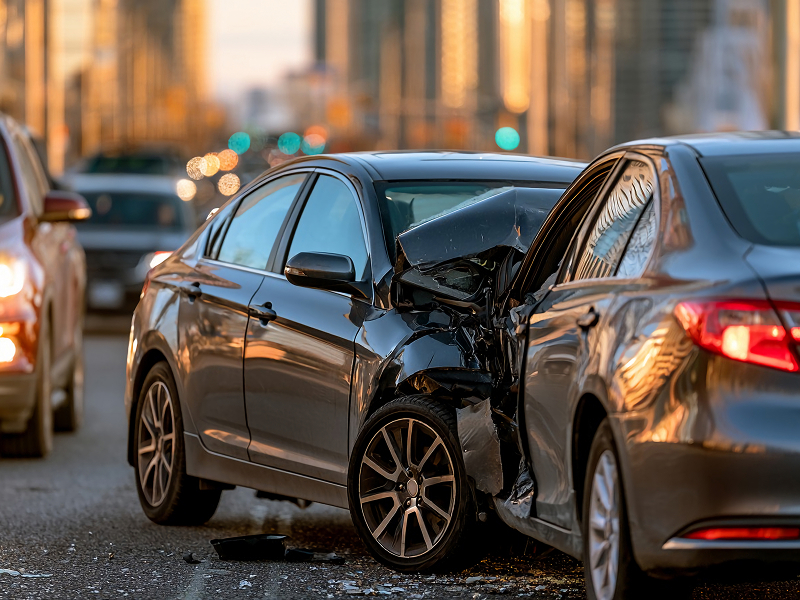
It’s quite easy to view a new bridge simply as a tool for convenience, but urban planners also look at it through the lens of safety. The stop-and-go gridlock is a primary breeding ground for minor accidents, and when hundreds of cars are packed tightly together, moving at single-digit speeds, drivers easily succumb to distractions. Moreover, even a quick glance at a smartphone or a momentary lapse in concentration frequently results in rear-end collisions.
By increasing traffic capacity and smoothing out the flow of vehicles, the Dubai Harbor Access Bridge eliminates the volatile environments where minor accidents happen because drivers traveling on wide, well-marked, and elevated lanes encounter far fewer points of friction, such as sudden lane merges or unexpected braking.
The Domino Effect on Motor Insurance in the UAE
Wondering what a brand new bridge has to do with your annual insurance policy? Well, it has to do a lot more with your insurance policy than you might think. In the UAE, motor insurance premiums are calculated using highly sophisticated risk-assessment matrices, and insurance underwriters evaluate historical accident data, localized traffic densities, as well as regional claim frequencies to set their rates.
When major infrastructure improvements like the Dubai Harbour Access Bridge go live, they generally alter these variables in three distinct ways:
Reduction in Frequency of Minor Claims
As localized bottlenecks ease up, the volume of minor fender-benders also drops, and fewer accidents mean fewer insurance claims filed within that specific geographic sector.
Shift in Region Risk Profiling
Insurance companies frequently track where accidents occur, and waterfront districts plagued by heavy construction or permanent gridlock are often classified as higher-risk zones, which means that improved road networks can lead insurers to re-evaluate and lower the risk rating for those areas.
Rewards for Safe Driving via Telematics
Modern insurance policies in the UAE are increasingly using data to track driver behavior, and with smooth, continuous roads, motorists can maintain steady speeds and avoid harsh braking, which are metrics that look incredible on your driving record and help secure “no-claims” discounts.
While insurance rates will not drop overnight the moment the bridge opens, a sustained decrease in regional accident rates invariably creates downward pressure on premium prices, while benefiting vehicle owners across the Emirate.
Final Thoughts
As final touch-ups, asphalt paving, and safety testing on the Dubai Harbour Access Bridge are near completion, motorists can look forward to a completely transformed driving experience. The days of agonizing over whether to visit Dubai Harbour due to intimidating traffic will soon be a thing of the past because now is the era of safer roads, reduced travel times, and an optimized driving ecosystem, which leads to a more predictable, enjoyable, and economical journey for everyone.
Want to protect your journey with confidence through online motor insurance in Dubai? Contact the team at New India Assurance Co. Ltd. today!
Note: Procedures and requirements may vary from one insurer to another. It is always advisable to contact the insurance provider directly to understand their specific policies, processes, and terms.
Connect & Share:


Latest Blog






3 September 2026
Car Insurance for Senior Drivers in the UAE – What Changes After 60?


7 August 2026