
May 14, 2026
Driverless Cars in the UAE: How Will Car Insurance Work in the Future, and Who Pays for Accidents?
 Car Insurance
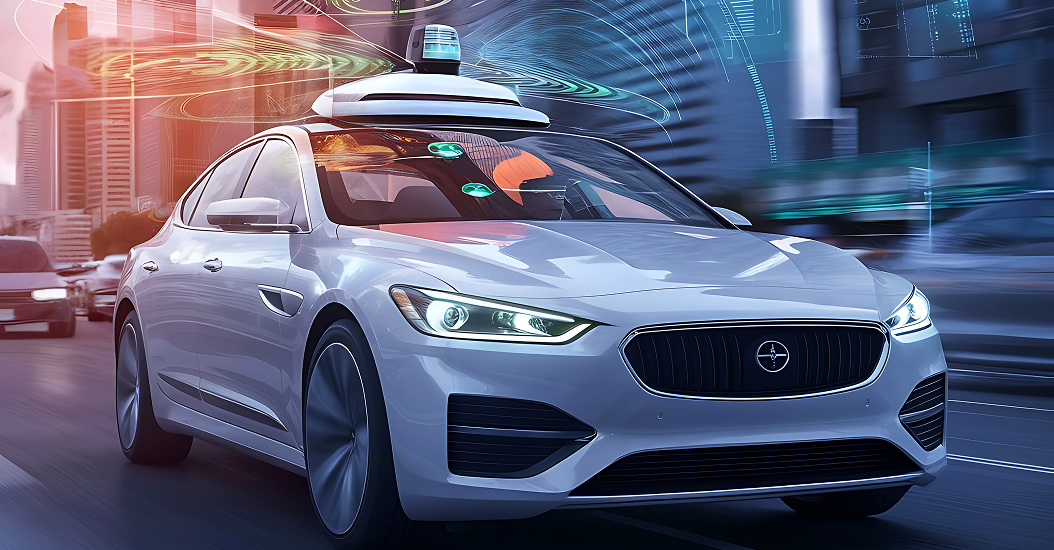
Alan Kay once said, “The best way to predict the future is to invent it.” And the UAE has taken this idea and implemented it quite literally. From smart cities to AI-led governance, the country is actively pioneering a future where driverless cars are not considered a novelty but a norm. While this technology is quite impressive, it raises a critical question: Who will be responsible when something goes wrong? If no one is technically driving the car, who should be held accountable, and how does Motor Insurance in UAE adapt to this shift? Let us explore.
The core shift in responsibility and liability
Autonomous vehicles aren’t simply changing the way we drive; they’re actively transforming all the associated industries, including car insurance. The growth of autonomous vehicles in the UAE is leading to a complete transformation of urban mobility. Traditionally, when you buy car insurance in the UAE, it revolves around a simple premise: The driver is responsible for the damages. Driverless cars have made this logic redundant. In a world where human error causes most of the road accidents, automation has the potential to drastically reduce crashes. Currently, insurance models rely on:
- Human-centric data: Personal data such as driving history, age, location, and behavioural patterns is used to calculate premiums.
- Fault-based liability: We know that no manual work is without its share of errors, and the same goes for driving. In most cases, accidents are attributed to driver errors, which makes it easier to determine responsibility and assess claims.
- Minimal technological consideration: In traditional insurance models, technology plays a secondary role, with limited emphasis on software performance or system reliability.
As risk evaluations are highly based on historical data rather than real-time inputs, the current vehicle insurance models have limited adaptability. To counteract this, a new liability framework to build new insurance models may involve:
| Situation | Responsible party |
| Human intervention error | If the accident is caused by a human intervention error, then likely the individual would be liable. |
| Software malfunction | In case of an accident caused by a software malfunction, the vehicle manufacturer would be held accountable. |
| Sensor or hardware failure | For sensor or hardware failure, the component supplier is likely to be held accountable. |
| Mixed control scenarios | In a situation where both the individual and the vehicle are responsible for the accident, the liability will be shared by both parties. |
The future of motor insurance in the UAE
In the case of autonomous vehicles, trust shifts from drivers to software systems. Automation reduces human intervention, and responsibility inclines towards manufacturers, software developers, and technology providers. Insurance policies must evolve and adapt in accordance with the new shift. The transition from traditional to autonomous insurance models is already underway, with key features being:
Technology-driven risk assessment
The new insurance premiums will heavily rely on vehicle performance, system reliability, and software integrity rather than the driver’s behaviour.
Real-time data integration
No more worrying about where you were or what you were doing as insurers receive real-time vehicle logs, AI analytics, and continuously monitor vehicle performance to assess risk and process claims.
Cybersecurity
As technology becomes more accessible with easy over-the-air updates and connected systems, cyber risks become a critical component of underwriting. Hence, insurance models must account for such complications and deal with claims accordingly.
What does this mean for you?
The UAE government is proactively creating and encouraging new policies to support the venture of autonomous mobility with their:
- Dedicated frameworks for self-driving vehicles.
- Vehicle and passenger safety and operational guidelines.
- Reviewing and generating insurance models
But here’s what you might be wondering: “What is in it for me?” Well, the answer to that question lies in the trust you have in a system that never gets tired, distracted, or emotional. Strictly speaking, from the motor insurance point of view, you will be able to enjoy:
Efficient premiums
Lower risk and better premiums, isn’t that what we ultimately want? With automation reducing human error, insurers can get a more accurate analysis, potentially lowering premiums based on vehicle performance. Access to real-time data allows insurers to assess incidents more quickly, reducing disputes and clearing claim settlements faster.
Shared liability
Earlier vehicle owners used to feel burdened with providing a detailed account of the incidents to initiate a claim. Now, with the shift in liability across manufacturers and technology providers, individual owners are relieved of the financial and legal pressures.
Personalised coverage
Soon, insurance policies will become highly tailored, using factors like a vehicle system’s performance, autonomous features, and overall usage patterns. Advanced vehicle systems are designed to assess road conditions and prevent collisions before they happen, thus leading to fewer claims, less downtime, and greater peace of mind for owners.
Final Thoughts
The rise of driverless cars is an imminent reality, especially in a technology-driven country like the UAE. And along with it comes the complete redefinition of liability, risk, and insurance. Whether you’re a vehicle owner, an organisation, or simply an individual who likes to be prepared and wants to buy car insurance in UAE, The New India Insurance Company Limited can help you explore future-ready insurance solutions tailored for this evolving automotive landscape.
Note: Procedures and requirements may vary from one insurer to another. It is always advisable to contact the insurance provider directly to understand their specific policies, processes, and terms.
Connect & Share:


Latest Blog


3 September 2026
Car Insurance for Senior Drivers in the UAE – What Changes After 60?

7 August 2026